When we talk about Workplace Wellbeing, we hear about stress, fatigue, overwhelm, and the growing challenges people face in balancing work, family, and life commitments. In short … burnout.
What if wellbeing is about more than simply avoiding burnout?
A concept known as the Burn In Model offers a different way of thinking about wellbeing.
Developed by Occupational Therapists Rhiannon Crispe and Michelle Luken, the model suggests that thriving isn’t simply the absence of burnout. Instead, wellbeing is more likely when important aspects of our lives are aligned.
What Is Burn In?
Most of us are familiar with the idea of burnout. It describes a state of emotional, mental, and physical exhaustion that can develop when demands consistently outweigh our resources.
Burn In takes a different perspective.
The Burn In Model encourages us to think about what gives us energy, purpose, and a sense of fulfilment, rather than focusing on what drains our energy.
The Burn In model centres around three key questions:
1. Who Are You?
This relates to your values, strengths, interests, and sense of identity.
What matters to you?
What gives your life meaning?
What are the strengths and qualities that make you who you are?
2. What Do You Do?
This includes the activities that fill your day, both at work and outside of work.
It might include your job, family responsibilities, hobbies, exercise, volunteering, learning, or social activities.
3. Where Do You Belong?
Humans are social beings. Our wellbeing is influenced by the people, places, and communities we feel connected to.
This may include our workplace, family, friends, cultural groups, sports clubs, or wider community.
Why Alignment Matters
According to the Burn In Model, wellbeing is more likely when these three areas are aligned.
For example, a person may feel energised when their work reflects their values, allows them to use their strengths, and provides a sense of connection with others.
In contrast, people may begin to struggle when there is ongoing misalignment. Perhaps their work no longer reflects what matters to them. Maybe they feel disconnected from their team, or they are spending most of their time on activities that don’t utilise their skills and strengths.
Over time, these mismatches can affect motivation, engagement, and overall wellbeing.
What Does This Mean for Workplaces?
Many organisations are investing in wellness initiatives, and these can play an important role in supporting employee health.
The Burn In Model reminds us that wellbeing is influenced by more than wellness programmes alone. As we discussed in our recent article, Wellness vs Wellbeing: What’s the Difference?, wellbeing is shaped by many factors, including how people experience their work every day.
People are more likely to thrive when they:
- Feel connected to their team and workplace
- Understand how their work contributes to a larger purpose
- Have opportunities to use their strengths
- Feel supported and valued
- Have a sense of belonging
- Balance the demands of work and life
These factors also align closely with many of the psychosocial factors known to influence workplace wellbeing. You can read more in our article on Psychosocial Risks in the Workplace, which explores how the design of work and workplace culture can impact employee wellbeing.
A Different Way to Think About Wellbeing
The Burn In Model is still a relatively new framework, but it offers a useful reminder that wellbeing is not simply the absence of stress or burnout.
Sometimes the key to improving wellbeing isn’t adding more to our to-do list.
Sometimes it’s stepping back and asking if your employees –
- Feel connected to their team and workplace
- Understand how their work contributes to a larger purpose
- Have opportunities to use their strengths
- Feel supported and valued
- Have a sense of belonging
- Balance the demands of work and life
When purpose, connection and meaningful activity are aligned, wellbeing has room to flourish.
Perhaps that’s what Burn In is really about.
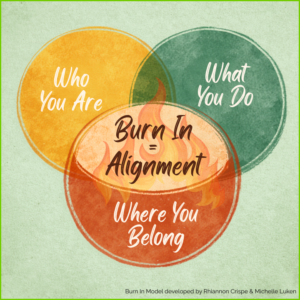
The Burn In Model was developed by occupational therapists Rhiannon Crispe and Michelle Luken.
This article provides an overview of the model and its relevance to workplace wellbeing.