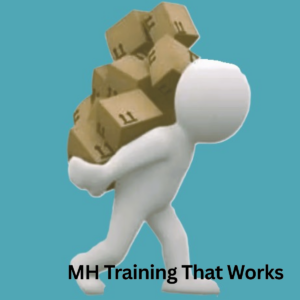
Most organisations have provided their workers some form of manual handling training, and many workers have participated in more than one manual handling session.
Workers attend the session, learn the techniques, perhaps complete a quiz or sign an attendance sheet – and then head back to work.
But the same strains, sprains and injuries keep happening, and it raises an important question:
What are the workplaces that successfully reduce manual handling injuries doing differently?
Training Is Only Part of the Picture
Effective manual handling injury prevention isn’t simply about delivering a training session.
Organisations that achieve lasting improvements look beyond the classroom. They focus on helping their workers develop better movement habits and making those habits part of everyday work.
That means practical learning, simple cues, opportunities to practise and reinforcement over time – not just information delivered in a one-off session.
People need to understand why a movement matters, experience what better movement feels like, and have opportunities to apply it to the work they actually do.
Make Good Movement Easier to Remember
In a busy workplace, people aren’t going to stop mid-task and mentally run through a list of manual handling rules and pick the right one for the job.
When work is fast, awkward, repetitive or physically demanding, people tend to fall back on old habits.
Rather than expecting workers to remember a long list of instructions, effective training gives people practical principles they can recognise and apply in the moment.
The aim isn’t to create more rules. It’s to make safer, more efficient movement the easier choice.
Practice Makes the Difference
Knowing what to do and actually doing it are usually two different things.
A worker might demonstrate a good lifting technique during training, but that doesn’t necessarily mean it will become their natural way of moving during a busy shift.
Movement is a physical skill.
Like learning to drive, playing a sport or developing any other physical skill, it improves through practice and repetition.
The more often people experience and practise better movement, the more familiar it becomes – until it eventually becomes second nature.
Bring It Into the Workplace
Training is more likely to make a difference when it connects directly to the work people actually do.
What are the awkward tasks? Where are people reaching, twisting, pushing, pulling, lifting or carrying? Where do fatigue or time pressure make good movement more difficult?
These real-world factors matter.
Practical manual handling training should give people opportunities to consider how the principles apply to their own tasks, rather than simply learning techniques in isolation.
Reinforce the Learning
The best training doesn’t end when the trainer leaves.
Managers and team leaders can help reinforce the learning by prompting when they see an incorrect move about to happen …
A quick reminder.
A conversation after observing a task.
Recognising when someone is using a good movement strategy.
These small moments help turn training into a shared way of working. Over time, that’s how new habits become part of workplace culture.
So, What Are Successful Workplaces Doing Differently?
There isn’t one magic solution. But workplaces that make sustained progress tend to take a proactive approach to movement and injury prevention. They:
✓ Provide practical, hands-on training
✓ Connect training to real workplace tasks
✓ Use simple, memorable movement cues
✓ Give people opportunities to practise
✓ Reinforce the learning over time
✓ Encourage shared responsibility for safer movement
Most importantly, they don’t treat manual handling training as a box to tick off. They treat it as part of an ongoing approach to preventing sprains and strains.
How AIM Can Help
At AIM, we deliver Provention’s First Move Manual Handling Training. This is designed around practical movement skills that workers can understand, practise and apply to everyday tasks.
Delivered by experienced professionals, the two-hour hands-on workshop focuses on simple, memorable principles that help participants build safer and more efficient movement habits.
Sessions can be delivered onsite and tailored to your workplace, team and the tasks they perform.