Learning Takes Practice
Think back to when you first learned to drive.
Your first lesson probably didn’t make you a good driver. You learnt how to start the car, steer, check your mirrors and understand the road rules.
But knowing what to do wasn’t enough. You needed to practise.
You made mistakes. You repeated the same skills. You gradually became more confident and, eventually, the actions became automatic.
We don’t expect one driving lesson to make a skilled driver. So why do we expect one workshop to create lasting change?
Wellbeing isn’t usually a skill we master in a single session.
A workshop can provide knowledge, increase awareness and introduce practical strategies. But the real benefit comes when people have the opportunity to think about what they’ve learnt, try it out, revisit it and make it part of everyday life.
That’s the difference between being told something and developing a new habit.
Wellness Activities Can Support Wellbeing
As we explored in our article Wellness vs Wellbeing: What’s the Difference?, wellness initiatives are activities that can support wellbeing. Wellbeing itself is the broader outcome.
A workshop is one of those activities. It can provide useful tools and knowledge – but it works best when it’s part of a bigger picture.
Starting the Ripple
Imagine dropping a small stone into a still pond.The stone creates the first ripple.
The ripples then spread outwards.
A wellbeing workshop can work in much the same way.
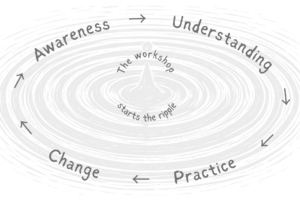
The workshop starts the ripple.
What happens after the workshop determines the benefits.
Of course, the quality and approach of the workshop matters too.
Sitting through a presentation and being given a list of things you “should” do is unlikely to create lasting change on its own.
Effective wellbeing workshops should give people something they can understand, relate to and use.
They should create opportunities to reflect, ask questions and consider how the ideas apply to their own circumstances.
Most importantly, participants need to leave with practical strategies they can actually use.
When the Workshop Ends, the Learning Continues
When the workshop ends, it should not mean the learning ends.
Revisiting the ideas, trying out new strategies, talking about them with colleagues and receiving encouragement from managers can all help turn a good workshop into lasting change.
Sometimes it’s a small reminder a few weeks later. Sometimes it’s a conversation with a colleague.
Those are the ripples continuing.
At AIM, our wellbeing workshops are designed to provide that starting point. Each workshop covers different aspects of wellbeing, depending on what your workplace and people need, for example –
Stress Management – recognising stress and developing practical strategies for managing it.
Sleep Management – understanding the habits and behaviours that support better sleep.
Resilience – building practical strategies to navigate challenges and recover from setbacks.
Compassion Fatigue – recognising the impact of caring for others and developing strategies to protect your own wellbeing.
Each workshop has a different focus, but the goal is the same: to give people practical knowledge and strategies they can take away, apply and build into everyday life.
The Ripple Continues
A wellbeing workshop isn’t a magic fix.
It’s an opportunity to pause, learn something new, have a conversation and make small changes.
And just like the first ripple from a stone dropped into a pond, that small beginning can spread much further when it’s supported and reinforced over time.
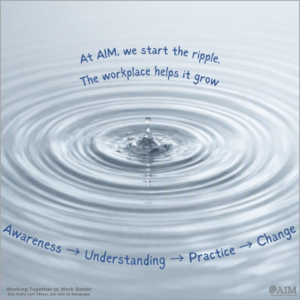
The workshop starts the ripple.
The workplace helps it grow.