We’ve all experienced it ….
You sit down at a café, rest your elbows on the table, and suddenly it tips or wobbles because one leg is slightly uneven.
The table still stands, still holds your food and drink, but it doesn’t feel stable. You have to be careful not to upset it’s balance.
Our wellbeing isn’t so different. Just as a wobble in one table leg can affect the stability of the whole table, a challenge in one area of our wellbeing can gradually influence others.
When one area of our wellbeing is under pressure, the effects often ripple into other parts of our lives. Stress can lead to poor sleep. Poor sleep can leave us feeling tired and less able to concentrate. Fatigue can increase the risk of mistakes or injury, which may create financial pressures or time away from work -adding even more stress. It’s rarely just one thing. The domino effect can cause many seemingly unrelated issues.
Many people think wellbeing is simply about eating well, exercising regularly or getting enough sleep. While these are all important, wellbeing is much broader than any one habit or activity. It’s influenced by many different areas of our lives, and those areas are closely connected.
There are many ways to think about wellbeing. Some models describe four key areas, while others include additional dimensions such as spirituality or financial wellbeing. In Aotearoa New Zealand, Te Whare Tapa Whā reminds us that wellbeing is strongest when different dimensions of our health are considered together.
Wellbeing is strongest when the different areas of our lives support the whole.
Four Key Areas That Help Keep Our Wellbeing Steady
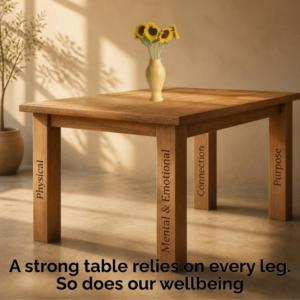
For this article, we’ve grouped wellbeing into four key areas. Together, they help create a strong and balanced foundation – much like the four legs of the table.
- Physical wellbeing
Looking after your body through movement, sleep, nutrition and recovery. - Mental & emotional wellbeing
Looking after your thoughts, emotions and ability to cope with life’s challenges. - Connection
Building positive relationships with family, friends, colleagues and your community. - Purpose
Having meaning in what you do and feeling that your work and life have value.
When one of these areas needs attention, our wellbeing table can start to wobble.
That doesn’t mean everything falls apart. It simply means we may not be feeling quite right.
The Good News …
Unlike a table, our wellbeing can change and grow over time.
Small improvements in one area can have a positive effect on others. We can strengthen our wellbeing – it will change as our circumstances and habits change.
A short walk can lift your mood. A supportive conversation can reduce stress. A better night’s sleep can improve concentration.
Feeling more connected at work can strengthen resilience during busy periods.
Often it’s not about making huge changes. It’s about noticing which part of your wellbeing needs a little attention.
We Don’t Leave our Wellbeing at Home
Whether we’re at home or at work, these areas of wellbeing continue to influence one another.
Because we spend such a large part of our lives at work, the workplace can either strengthen our wellbeing – or place it under additional pressure.
Supportive relationships, manageable workloads, opportunities to speak up and feeling that our work has purpose all help keep our wellbeing table steady.
That’s why creating healthy workplaces isn’t just about offering wellbeing initiatives. It’s about creating an environment where people feel connected, valued and supported every day.
A simple question to ask yourself
If your wellbeing were a table …
Which leg feels strongest today?
And…
Which one needs a little attention today?
Sometimes recognising the wobble is the first step towards finding your balance again.
If you enjoyed this article, you may also like: